
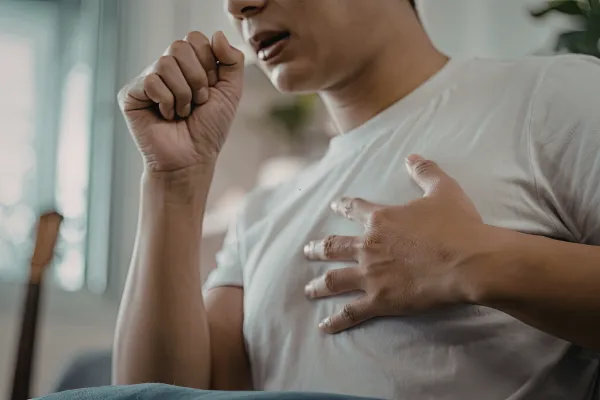
Why Am I Coughing More At Mealtimes?
Why Am I Coughing More At Mealtimes?
Have you noticed that you are coughing more when eating or drinking?
Perhaps it only happens occasionally. Maybe you find yourself clearing your throat after a sip of water. Or perhaps family members have started asking if you are okay during meals.
Many people assume coughing at mealtimes is normal.
While occasional coughing can happen to anyone, frequent coughing when eating or drinking may be a sign that something is not working as smoothly as it should.
Understanding why this happens can help you know when it might be time to seek advice.
Why Do We Cough?
Coughing is one of the body's natural protective reflexes.
When food, drink, saliva, or even tiny particles go towards the airway instead of the food pipe, the body reacts by coughing to help clear it away.
In many cases, this is a good thing.
It means your body is recognising that something has gone the wrong way and is trying to protect your lungs.
However, if coughing happens regularly during meals, it may suggest there is a problem with swallowing.
What Is Dysphagia?
The medical term for swallowing difficulties is dysphagia.
Swallowing is actually a very complex process involving dozens of muscles and nerves working together.
When everything works properly:
Food and drink move safely from the mouth to the stomach.
The airway closes briefly to protect the lungs.
Swallowing feels effortless.
If any part of this process becomes less efficient, food or drink may enter the airway, causing coughing or choking.
Common Reasons For Coughing During Meals
1. Food or Drink Going "The Wrong Way"
This is one of the most common reasons.
Instead of moving smoothly towards the stomach, food or drink enters the entrance of the airway.
The body's response is to cough and clear it away.
This can happen with:
Thin drinks such as water, tea, or coffee
Crumbly foods
Mixed textures such as soup with chunks
Dry foods like crackers or biscuits
2. Changes After Stroke or Brain Injury
A stroke or brain injury can affect the muscles and nerves involved in swallowing.
Some people notice:
Coughing when drinking
Food sticking in the mouth
Difficulty managing saliva
Longer mealtimes
Swallowing problems can appear immediately after an injury or develop over time.
3. Parkinson's Disease and Other Neurological Conditions
Conditions such as Parkinson's disease, Multiple Sclerosis (MS), Motor Neurone Disease (MND), and some forms of dementia can affect swallowing.
Changes may happen gradually and can include:
More coughing during meals
A wet or gurgly voice after swallowing
Taking longer to finish meals
Difficulty managing certain foods
Because these changes often develop slowly, people sometimes do not realise they are happening.
4. Muscle Weakness
As we get older or experience certain health conditions, the muscles involved in swallowing may become weaker.
This can make it harder to move food and drink safely through the throat.
Signs That Swallowing May Be Becoming More Difficult
Coughing is only one possible sign.
Other symptoms can include:
Throat clearing during meals
A sensation that food is sticking
Needing several swallows to clear food
Food remaining in the mouth after eating
A wet or gurgly voice after swallowing
Unexplained weight loss
Avoiding certain foods
Taking much longer to eat meals
Recurrent chest infections
If you notice several of these signs, it may be worth seeking professional advice.
Is It Always Serious?
Not necessarily.
Sometimes coughing occurs because:
We are eating too quickly
We are distracted while eating
Food is particularly dry
We take very large mouthfuls
However, ongoing coughing during meals should not be ignored.
Repeated difficulties can increase the risk of food, drink, or saliva entering the lungs.
Over time, this can contribute to chest infections and affect overall health.
What Should I Do If I Am Coughing More At Mealtimes?
If coughing is becoming more frequent, consider:
Sitting upright when eating and drinking
Taking smaller mouthfuls
Slowing down during meals
Avoiding talking while swallowing
Staying well hydrated
Most importantly, seek an assessment if symptoms continue.
A swallowing assessment can help identify what is happening and recommend strategies to make eating and drinking safer and more comfortable.
How Can Speech and Language Therapy Help?
Speech and language therapists are specialists in swallowing as well as communication.
An assessment may help identify:
Which foods or drinks are causing difficulty
How your swallowing is working
Whether strategies could improve safety
Exercises that may strengthen swallowing muscles where appropriate
The goal is not simply to reduce coughing.
It is to help people eat and drink as safely, comfortably, and independently as possible.
Don't Ignore Persistent Coughing At Mealtimes
Many people live with swallowing difficulties for months or even years before seeking help.
They often assume it is just part of getting older or a consequence of a medical condition that cannot be changed.
In reality, support is available.
If you are regularly coughing when eating or drinking, it is worth finding out why.
At Speech Therapy Glasgow, we support adults with swallowing difficulties caused by neurological conditions, stroke, brain injury, and other health concerns. Early assessment and advice can help reduce anxiety around mealtimes and support safer eating and drinking.
If coughing during meals is becoming a regular part of life, seeking professional advice may be an important first step.